Bilaspur district — Gobind Sagar Lake — The Story of a Drowned City

Bilaspur District — Gobind Sagar Lake — The Story of a Drowned City

Himachal Pradesh · Oct–Mar · 380–1800 m altitude

Quick Facts Places to Visit Food Plan Trip

About Bilaspur

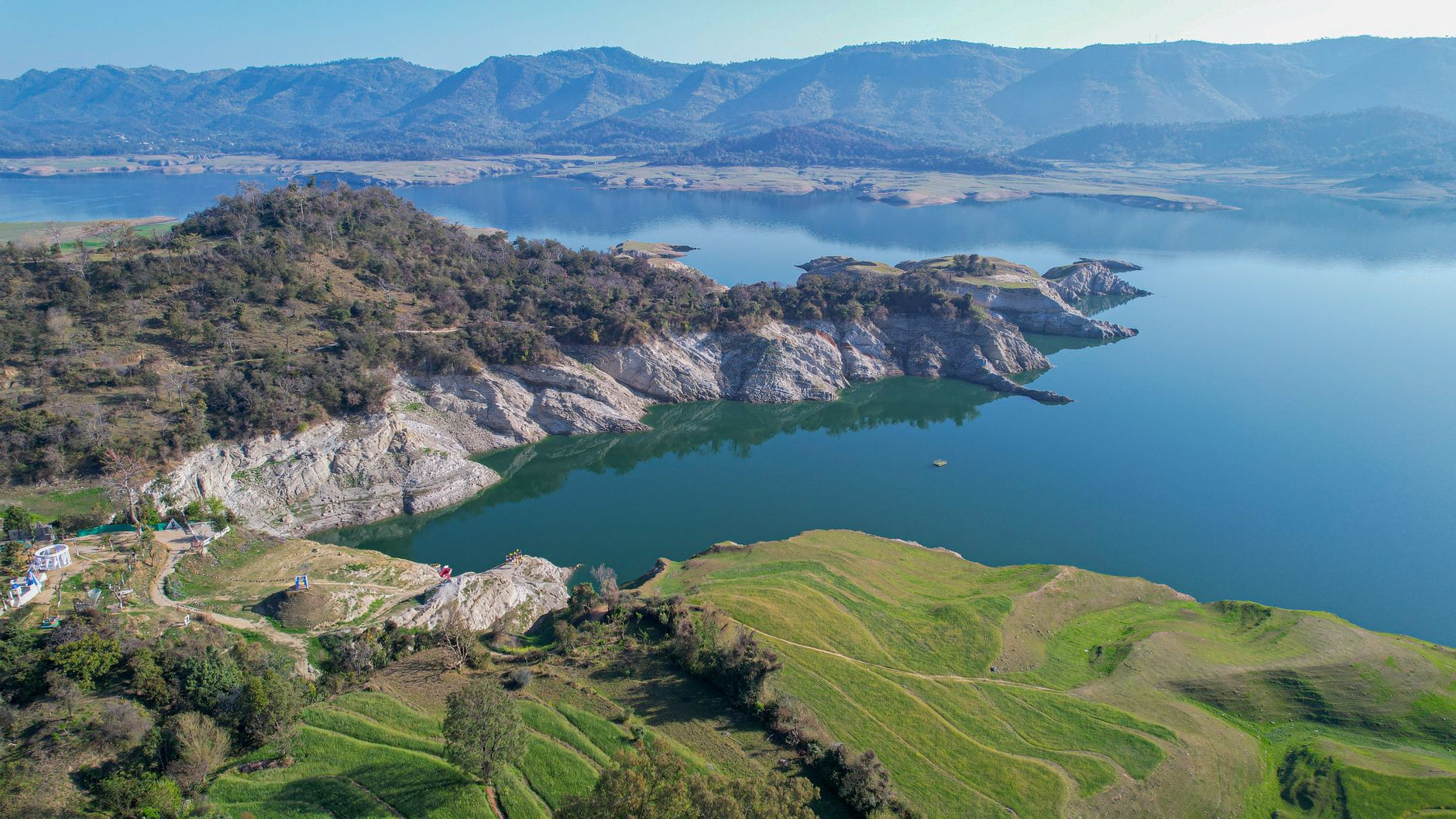
Bilaspur has a unique and poignant history: the old Bilaspur town was submerged when the Bhakra Dam created Gobind Sagar Lake in 1954. The new town stands above the reservoir. Gobind Sagar is now among India's larger man-made lakes and a key place for water sports. Naina Devi temple, perched on a 1,219-m ridge overlooking the lake, ranks among the most important Shakti Peethas in northern India. AIIMS Bilaspur is India's newest premier medical institution.
Quick Facts

District HQ
Bilaspur
Area
1167 km²
Altitude
380–1800 m
Best Season
Oct–Mar
Summer Temp
25–42°C
Winter Temp
5–20°C
Nearest Airport
Chandigarh
From Delhi
340 km

Top Places to Visit (10)

Gobind Sagar Lake

168 km of water
  • India's fifth-largest man-made reservoir by water volume, Gobind Sagar was created in 1963 when the Bhakra Dam impounded the Satluj river, submerging the ancient town of Bilaspur, 360 villages and their temples beneath 168 km of water.
  • The reservoir at full capacity stretches 90 km in length and covers 540 sq km — a vast inland sea ringed by Shivalik hills.
  • Water sports including kayaking, water-skiing, speed boating and angling (mahseer and rohu are present in significant numbers) are organised from the Luhnu and Govind Sagar shoreline facilities.
  • The lake changes character dramatically by season: blue and windswept in winter, green and still in pre-monsoon, and retreating to reveal red mud banks during the October drawdown.
  • Fishing permits are available through the HP Fisheries Department.

Naina Devi Temple

1,219 m1 km of steps
  • At 1,219 m on a ridge that drops sharply 700 m into Gobind Sagar on three sides, the Naina Devi temple commands among the most spectacular positions of any religious site in Himachal Pradesh — the lake visible in three directions from the hilltop.
  • Naina Devi is one of the 51 Shakti Peethas, marking where the eyes (nain) of the goddess Sati fell.
  • The temple receives several million pilgrims annually, swelling enormously at Navratri.
  • A ropeway from the base at Anandpur Sahib side provides access for those unable to climb the 1 km of steps.
  • The adjacent Gobind Sagar viewpoint is a notable sunset observation points in the district, with the lake reflecting the fading light in extraordinary colour.

Bhakra Dam

226 m
  • The Bhakra Dam on the Satluj river at the Himachal-Punjab border is a concrete gravity structure 226 m tall — among the higher gravity dams in the world at the time of its completion in 1963.
  • Jawaharlal Nehru called it the 'New Temple of India', a phrase that captured the post-independence faith in large infrastructure as the instrument of national development.
  • The Bhakra-Nangal project, which the dam anchors, irrigates 10 million hectares across Punjab, Haryana and Rajasthan and produces 1,325 MW of power.
  • Travellers can enter the dam area with a security permit obtainable at the gate; the view from the dam crest 210 m above the Satluj gorge is vertiginous.
  • The engineering heritage of the dam and its associated infrastructure — the power houses, the railway, the township — is considerable.

Bilaspur Town

  • The current district headquarters of Bilaspur was built on higher ground above the reservoir shoreline after the submergence of old Bilaspur in 1963.
  • The new town, planned in the 1950s, has the slightly incomplete character of a community built in anticipation rather than organically grown.
  • The displaced families from the 360 submerged villages were resettled here and in Punjab, carrying with them the oral history and cultural memory of the drowned landscape.
  • When the reservoir falls to extremely low levels in drought years, the ruins of the old Bilaspur fort, temples and roads briefly re-emerge from the water — ghostly appearances that draw the descendants of displaced families back to witness.
  • The Vyas Cave shrine on a riverside promontory is one of the few ancient sites that survived above the waterline.

Markand Temple

  • The Markand temple complex on the eastern shore of Gobind Sagar, accessible by boat from Bilaspur or by road via a rough track, is a 10th-century Shiva temple group that narrowly escaped submergence — the temples were located just above the full reservoir level.
  • The carved stone panels on the temple exteriors, depicting Shiva, Vishnu, their consorts and celestial beings, are of considerable artistic quality and comparable to the best temple sculpture of the Pratihara period.
  • The lakeside setting gives the complex a remarkably peaceful atmosphere, enhanced by the near-total absence of other visitors.
  • Fishing from the temple ghats is done by locals on non-festival days.
Koldam Dam

Koldam Dam

  • The Koldam Hydroelectric Project on the Satluj river immediately upstream of Gobind Sagar was completed in 2021, making it one of India's newest large hydroelectric installations at 800 MW capacity.
  • The reservoir behind the Koldam Dam occupies the narrow Satluj gorge above Sundernagar — a dramatically deep canyon where the river cuts through the Shivalik ridges.
  • The dam site can be reached on the road between Mandi and Bilaspur, and the reservoir has already attracted winter waterfowl.
  • The project's powerhouse is built underground within the gorge walls — an engineering approach that minimises surface impact.

Nalwari Fair Ground

  • The Nalwari Mela, held annually in March at the Bilaspur Chaugan (town maidan), is one of the largest traditional cattle and livestock fairs in Himachal Pradesh — an event of considerable antiquity that historically served as the primary market for livestock trade between the hill communities and the plains buyers.
  • While modern commercial livestock markets have reduced the scale of actual cattle trade, the fair has expanded as a cultural event with folk performances, food stalls, handicraft markets and agricultural equipment displays.
  • The March timing coincides with the post-winter agricultural opening, and the fair has a distinctly festive atmosphere.
  • The event runs for 3–5 days and draws tens of thousands of visitors.

Vyas Gufa

  • On a rocky promontory above the Satluj river within Bilaspur town, the Vyas Gufa (Cave of Vyasa) is a natural cave associated with the legendary sage Vyas — credited with composing or assembling the Mahabharata and the Vedas.
  • The cave has been a place of meditation for ascetics over many generations, and the current temple structure surrounding it has been maintained by a continuous succession of priests.
  • The cave survived the Bhakra submergence because it sits above the full reservoir level.
  • The Satluj gorge view from the cave entrance — the river 40 m below, the Gobind Sagar reservoir stretching south, and the Shivalik hills receding in every direction — is one of the district's finest viewpoints.

Dehar Hydro

430 m38 km trans-Himalayan tunnel at Sundernagar
  • The Dehar Power House on the Beas-Satluj Link Project, located where the diverted Beas water emerges from the 38 km trans-Himalayan tunnel at Sundernagar, is an underground power station buried within the hill — its turbines driven by a 430 m head of water from the Pandoh intake.
  • The exterior of the facility is modest, but the engineering concept — the water travelling more than 38 km underground to drop 430 m and generate power — is extraordinary.
  • The Dehar facility is not a tourist site per se, but the approach road along the Satluj between Bilaspur and Sundernagar passes through genuinely wild gorge country with good views of the river and the Shivalik formations.

Swarghat

  • Where the Satluj river enters Gobind Sagar at its northern end near Swarghat, the meeting of a fast mountain river with the still reservoir creates an exceptional landscape.
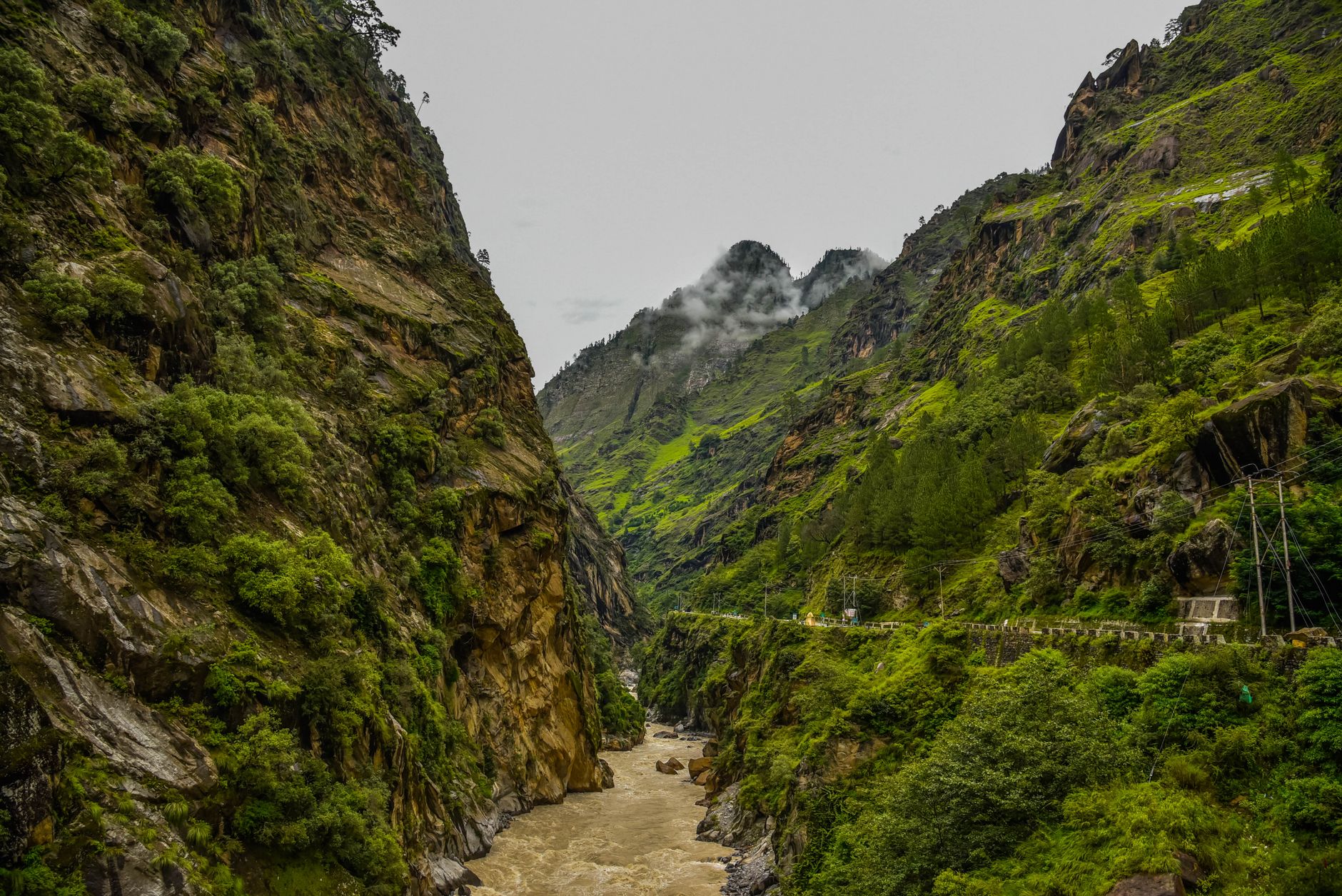
  • The Satluj in its final gorge section above this point cuts through narrow sandstone cliffs that are coloured in bands of red, orange and buff — the characteristic Shivalik geological palette.
  • A river beach at the confluence point is used for picnicking and casual fishing by local families.
  • The Swarghat bridge on the Bilaspur-Mandi highway is a viewpoint for watching the Satluj emerge from its gorge.
  • In October and November, when the reservoir is drawn down and the river is still running clear, the colour contrast between the blue-green river and the red cliffs is photogenic.

Local Food & Cuisine

Dham (feast)BabruMadraJhol (gram lentil curry)Mittha (sweet saffron rice)

Famous For

Gobind Sagar LakeBhakra DamNaina Devi Shakti PeethaWater SportsDrowned City story

Plan Your Bilaspur Trip

Talk to our local experts. Best packages, handpicked hotels, private cabs.

WhatsApp Us — Free Itinerary

Bilaspur Travel Guide: Places to Visit, Routes & Itinerary

Planning a trip to Bilaspur in Himachal Pradesh? Use this guide to discover tourist places, practical routes, sightseeing ideas and itinerary options. Himachal Explorer connects destination information with road-route planning so you can compare places and build a realistic day-wise trip.

For visitors searching for bilaspur himachal tourist places, gobind sagar lake and naina devi, this page brings together the key locations and travel-planning information in one place. You can also explore the Himachal tourist places map, compare Himachal tour packages, or use the Himachal trip planner to create a custom route.