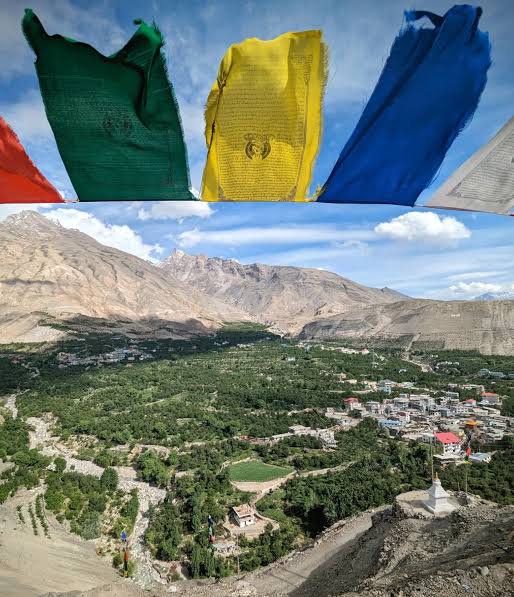
Spiti Valley is one of the most remote and spectacular destinations in India — a cold desert at 3,500–4,500 m altitude in Himachal Pradesh, bordering Tibet. The answer to "when to visit Spiti" depends entirely on how you plan to get there and what you want to see.
Quick Answer: Best Months
Both Rohtang and Kunzum passes open. All of Spiti accessible. Pleasant days.
Spiti stays dry (rain shadow). Greenest landscapes. Some landslide risk en route.
Crystal clear skies. Harvest season. Best photography. Roads fully stable.
First snowfall possible. Serene, few tourists. Kunzum may close mid-Oct.
Rohtang closed. Only Shimla–Reckong Peo–Nako–Kaza route (longer). Very cold.
Passes begin opening. Chandratal may still have snow. Check road status.
Month-by-Month Detail
June
This is when Spiti truly opens up. Rohtang Pass (3,978 m) clears for vehicles by late May or early June, and Kunzum Pass (4,590 m) opens shortly after. Temperatures range from 5–20°C at Kaza. Chandratal lake is usually accessible by mid-June. Days are long and sunny. This is peak tourist season — book hotels in advance.
July–August
Despite monsoon season across the rest of India, Spiti lies in the rain shadow of the Greater Himalayas and receives minimal rainfall. July and August are actually some of the best months — meadows are green, wildflowers bloom, and the skies clear dramatically after rain in the foothills. The main risk is landslides on the Manali–Rohtang section, so check road status before departure.
September
Widely considered the best month to visit. The monsoon has retreated. Skies are impossibly blue. Harvest activity begins in villages. The temperature is mild — 8–22°C at Kaza. Crowds thin out versus June–July. Photography is exceptional, especially at Key Monastery and Chandratal.
October
The first snowfall usually hits by early October at high elevations. Kunzum Pass typically closes by mid-to-late October. Kaza and the valley floor remain accessible from the Shimla–Kinnaur side throughout October. A beautiful and quiet time — just watch road closure updates closely.
November–April
Winter in Spiti is extreme — temperatures drop to −30°C at altitude. Rohtang is shut. The only route is the long Shimla–NH5–Pooh–Nako–Kaza road (roughly 12–14 hours from Shimla), which stays partially open but is weather-dependent. A handful of hotels in Kaza stay open year-round for the hardy winter traveller. Snowfall is spectacular but logistics are challenging.
Always check HRTC and HP Rohtang Pass e-permit portal for current road conditions. The Manali–Rohtang–Kunzum–Kaza route is quicker (8–9 hrs from Manali) but weather-dependent. The Shimla–Kinnaur–Nako–Kaza route is longer (12–14 hrs from Shimla) but accessible longer into the season.
Two Routes into Spiti
| Route | Distance from base | Open Season | Key Passes |
|---|---|---|---|
| Manali → Rohtang → Kunzum → Kaza | ~200 km / 8–9 hrs | June–Oct | Rohtang (3,978 m), Kunzum (4,590 m) |
| Shimla → Kinnaur → Nako → Kaza | ~410 km / 12–14 hrs | Apr–Dec | No high passes, but narrow cliffside roads |
What to Pack
Even in summer, Spiti nights are cold (5–10°C at Kaza). Pack a down jacket, thermals, and sunscreen (UV is intense at altitude). Carry cash — ATMs in Kaza are the only option past Reckong Peo. An inner line permit is required for Kibber, Pin Valley and areas near the Tibetan border — get it from the SDM office in Kaza or arrange through your tour operator.
Book a Spiti Valley Package
We run curated Spiti circuits from Chandigarh and Manali. 5 to 14 days. All permits, cabs and hotels handled.
WhatsApp Us — Plan My Spiti Trip